
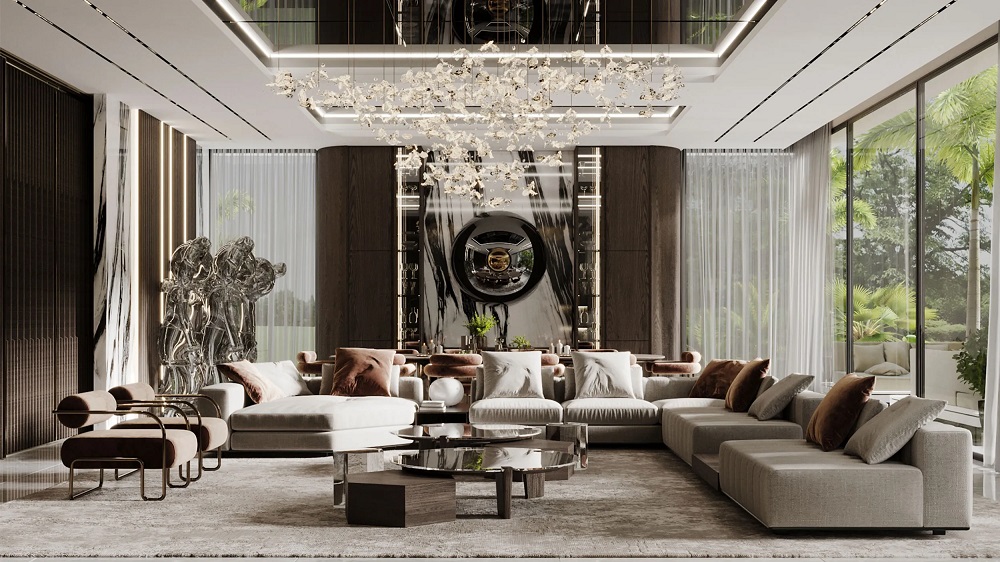
A villa should feel generous, calm and easy to use, but that does not happen by accident. Thoughtful villa interior design starts with layout, proportion, storage, lighting and the way each space supports daily life, rather than focusing only on decorative finishes.
Layout Shapes The Whole Experience
The layout of a villa affects how people feel from the moment they arrive. Entrances, corridors, living rooms, terraces, bedrooms and dining areas all need to connect in a way that feels natural. If the movement through the property is awkward, even beautiful furniture will not solve the problem.
Open-plan living can work well, but it needs structure. Seating areas, dining spaces and kitchen zones should feel connected without becoming visually messy. Subtle changes in flooring, furniture placement, lighting or ceiling detail can help define areas without closing them off.
The relationship between private and shared spaces also matters. Bedrooms should feel calm and separate, while social areas should encourage people to gather. A good layout gives everyone room to be together and room to retreat.
Scale And Proportion Matter
Large rooms can be surprisingly difficult to furnish. If the furniture is too small, the space can feel empty and uncomfortable. If the pieces are too large or too heavy, the room can feel crowded even when there is plenty of floor space.
Proportion should guide every decision. Sofas, dining tables, beds, rugs, lighting and artwork all need to suit the size of the room and the height of the ceiling. In villas with large windows or open terraces, furniture also needs to hold its own against strong architectural features and outdoor views.
Good design creates balance. The room should feel relaxed, not staged. People should be able to move through the space easily, sit comfortably and understand how the room is meant to be used.
Storage Should Be Built Into The Design
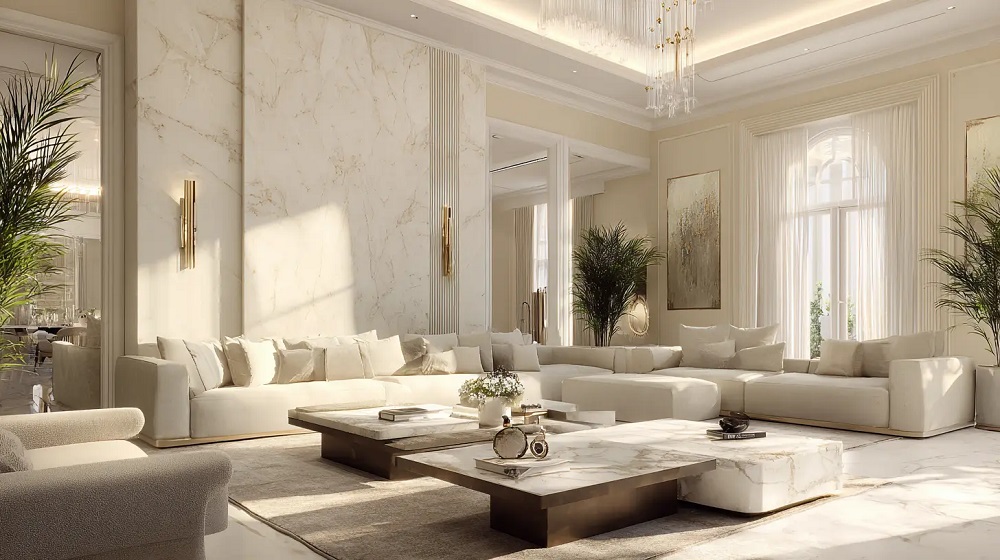
Storage is often overlooked in high-end properties because it is less visually exciting than furniture and finishes. However, poor storage can quickly weaken the experience of living in the space. Bags, towels, shoes, linen, outdoor cushions, cleaning items and personal belongings all need somewhere to go.
Well-planned storage keeps the design calm. Built-in wardrobes, concealed cupboards, practical utility areas and discreet shelving can make a villa much easier to manage. This is especially important for homes used by guests, where the layout should be simple to understand.
Storage should not feel like an afterthought. When it is built into the design from the start, the home stays tidier, functions better and feels more luxurious in everyday use.
Lighting Creates Atmosphere
Natural light is important, but evening lighting often determines how comfortable a villa feels. A single bright ceiling light rarely creates the right mood. Layered lighting, including wall lights, lamps, concealed lighting and outdoor lighting, gives the home more flexibility.
Different areas need different moods. A kitchen needs practical light, a dining area needs warmth, bedrooms need softness and outdoor spaces need enough light for safety without losing atmosphere. The lighting plan should support how the property is used at different times of day.
A well-designed villa feels effortless because the practical details have been handled quietly. When layout, proportion, storage and lighting work together, the result is a home that looks considered and feels comfortable to live in.